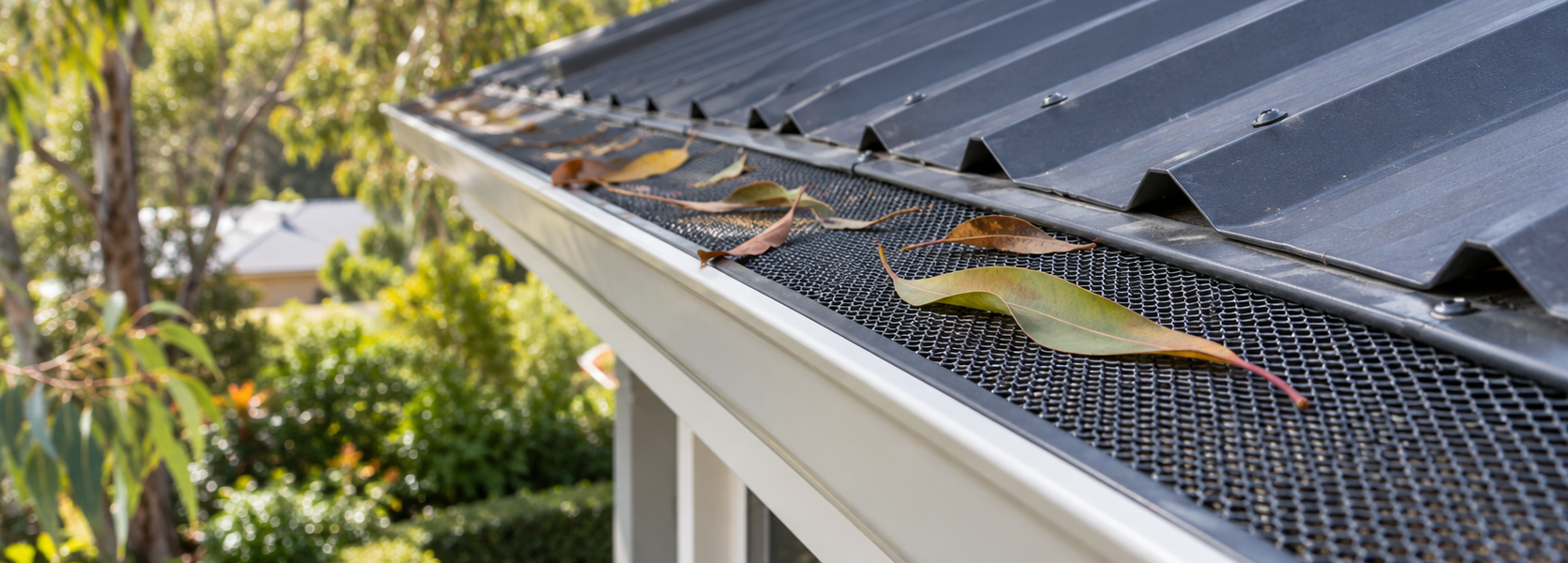

For homes surrounded by trees, a leaf stopper can help reduce the amount of fallen foliage entering the gutters. The main concern is keeping rainwater moving towards the downpipes rather than allowing debris to collect along the roofline. Choosing leaf mesh involves looking at the surrounding trees, the roof layout and how the system will be maintained. Large leaves are only part of the problem, as smaller fragments and windblown material can also accumulate. A suitable gutter mesh system should therefore be assessed as part of the home’s drainage setup, with attention to fit, condition and access for cleaning.
Why Leaves Become a Drainage Problem
A few dry leaves might seem harmless, but repeated accumulation can gradually restrict the space available for water. Once wet, leaves can settle into a compact layer that traps dirt and other debris. Material collecting near a downpipe outlet can create a bottleneck, even when the rest of the gutter appears relatively clear.
During rainfall, restricted drainage can cause water to spill over the gutter edge. Overflow may wet paths, garden beds or areas close to the building. Persistent overflow deserves investigation because the cause could be accumulated debris, a blocked downpipe or a problem with the gutter itself.
The location of the mess often provides useful clues. Debris concentrated beneath an overhanging branch suggests a local source, while material spread across several gutter sections may arrive on the wind. Understanding that pattern helps homeowners identify where protection and maintenance are most needed.
Match Protection to the Property
Different properties collect different types of debris. Broad leaves, fine needles, seed pods and small twigs do not behave in the same way. A system suited to catching large leaves may still allow finer material through, so the choice should reflect what actually falls onto the roof.
Before comparing products, homeowners can ask an installer to inspect the existing gutters and identify likely trouble spots. Roof valleys, corners and downpipe outlets deserve particular attention because water and debris may collect around these areas.
Fit also matters. Gaps around edges or joins can leave entry points for leaves, while an installation that makes routine inspection difficult may complicate future maintenance. The proposed system should suit the roof and gutter arrangement, with a clear explanation of how those details will be handled.
Product comparisons are more useful when they go beyond appearance or price. Relevant questions include what debris the system is designed to exclude, how it is secured and what maintenance the manufacturer recommends. Homeowners should also understand what any warranty covers and whether regular cleaning is a condition of that cover.
Start With Clean, Sound Gutters
Installing protection over existing debris leaves the original blockage in place. The gutters should be cleared first, and any visible drainage problems should be investigated before the installation proceeds.
This is also an opportunity to check for loose sections, leaking joins and damaged components. A protective cover cannot repair a gutter that is already leaking or resolve every cause of overflow. Addressing existing faults makes it easier to judge whether the completed system is working as intended.
Downpipes need attention as well. A clear gutter can still overflow when the outlet or pipe below it is obstructed. Where drainage problems continue after cleaning, a suitable tradesperson can assess the cause rather than assuming leaves are responsible.
Safe access should be considered from the beginning. For high roofs, awkward access or uncertain footing, professional inspection and cleaning are sensible options. A maintenance plan is only useful if the work can be carried out safely.
Protection Still Needs Maintenance
Gutter protection can reduce the amount of larger debris entering the channel, but it should not be treated as a maintenance-free solution. Leaves can gather on top of the cover, and smaller particles may still reach the gutter beneath it.
Inspection frequency should reflect the property’s surroundings. A home beneath several mature trees may need more attention than one with little nearby vegetation. Heavy leaf fall and storms are useful prompts for checking whether debris has accumulated.
Homeowners can also watch how the gutters perform during rain from a safe position at ground level. Water spilling repeatedly from the same section, dripping from joins or flowing poorly towards an outlet can indicate a problem that needs closer inspection.
Keeping a simple record of recurring trouble spots can help. If one corner repeatedly collects debris, the installer or maintenance provider has a specific area to assess. This is more useful than waiting until the entire gutter run is visibly overflowing.
The best approach combines suitable protection with clean gutters, sound components and practical upkeep. Homeowners who understand what their system can exclude, how it should be maintained and where drainage problems tend to occur are better placed to keep rainwater flowing and address issues early.